Running is one of the most effective ways to lose weight while improving cardiovascular health.
You’ve probably heard people saying that weight loss is a simple matter of consuming fewer calories than what your body burns.
Anyone who has tried to lose fat by taking fewer calories than they burn knows how challenging the whole idea can be. Sure, for a lucky few, the extra fat just melts off as soon as they start working out and reducing the number of calories they consume.
But for many of us who want to lose weight, the process is much more challenging and confusing. If only it were as simple as calories in, calories out – we wouldn’t have people suffering from obesity and other weight-related problems.
In today’s post, we will cover expert tips and strategies that can help you achieve your weight loss goals with running.
Stay tuned to get informed!
The Importance of Setting Realistic & Achievable Weight Loss Goals
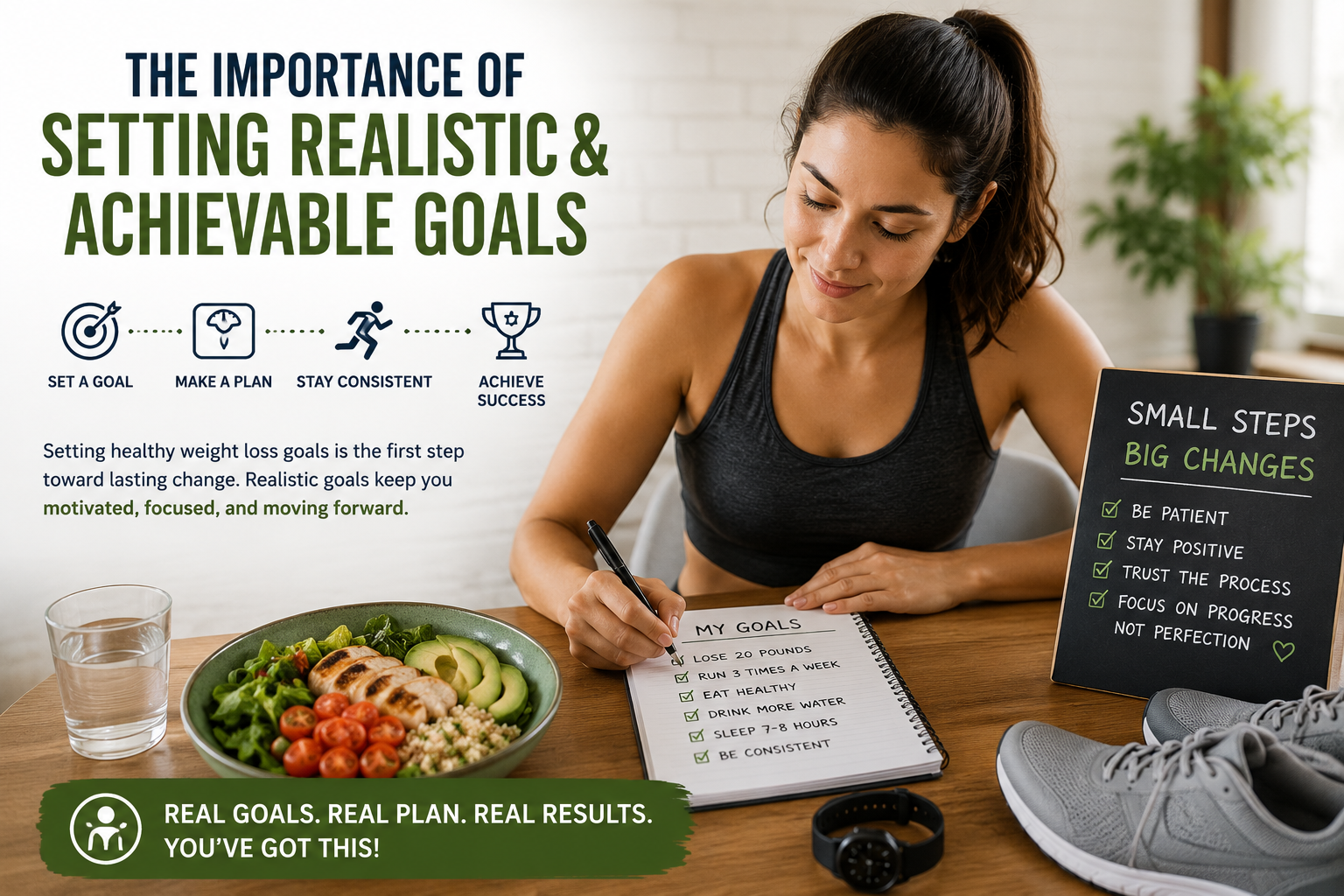
Weight loss is an important goal for many people, and running can be a helpful tool to achieve this goal. Then again, setting healthy weight loss goals is crucial to ensure long-term success. However, how you approach your personal weight loss goals can either hinder or help your ultimate success.
Assess Your Body Mass Index (BMI)
Start by figuring out how much weight you need to lose to feel healthier, more energetic, and happier. To do this, you need to assess your body mass index, which is a measure of body fat based on your weight and height. You can use one of the many online BMI calculators to assess your body mass index. A healthy BMI usually ranges from 18.5 to 25. Needless to say, BMI doesn’t distinguish between muscle weight and body fat weight. This means if you are heavily muscled you may have a high BMI but little body fat.
Consider Your Adult Weight History
Another way to figure out how much weight you need to lose is to consider your adult weight history. Take into account what you weighed 5 to 10 years ago. If you’ve gained 20 pounds over the past decade or so, that’s probably a good place to start. However, be realistic and set a weight that’s practical to achieve given your age and lifestyle.
Break Down Your Goal into Manageable Pieces
It is also important to break down your weight loss goal into manageable pieces. If you are planning to lose 20 pounds or more, start by setting monthly targets of 4 to 8 pounds. Smaller goals can be easy to achieve and can help boost motivation and self-confidence. As long as you are consuming the ideal number of calories for weight loss and not too few – men should expect to lose around 3 pounds per week and women around 2 pounds per week.
The rate of weight loss, however, slows down a little as you get closer to your end goal. That’s completely normal and shouldn’t frustrate you.
Commit Your Goals to Paper
After setting your realistic goals, commit them to paper and post them where you will review them frequently. Written goals serve as your contract. They not only engage but also motivate and keep you focused when temptations strike.
Track Your Progress
Tracking your progress is an important part of a realistic weight loss plan. Monitoring how you are doing provides motivation and accountability – two keys to successful weight loss. Use a mobile app or keep a daily food and fitness journal to track your food and calorie intake. Weigh yourself once a week and measure your waist once a month. The more monitoring you do and the feedback you get, the better you will do.
How to Get Started with Running
What’s the best way to lose weight through exercise? Anything that is going to get your body moving and your heart rate up is good. The most convenient and arguably most effective exercise is running. We’ve got a strategy that can help you use running as an effective weight-loss tool.
The most important tactic when running for weight loss is maintaining a good calorie deficit over a long period. In other words – you should burn more calories than you consume. This is where running is important. However, you have to consider that just because you are running, doesn’t mean you can eat an unlimited number of calories.
It isn’t an easy journey to start especially if you are overweight or obese. Though, a journey of a thousand miles begins with a single step. Here are important steps that can help you start your running for weight loss journey:
Consult with Your Doctor
It’s always recommended to get your doctor’s approval before you start running for weight loss. This way, you can modify your plan to account for any health issues you might have. Your doctor has a better understanding of your medical history and needs. Your physician is better equipped to advise you on what to do if you have concerns or a pre-existing medical condition.
Gear Up
You don’t need fancy gear to start running. All you have to do is invest in a high-quality, high-performing pair of running shoes. Also, you need moisture-wicking clothes for a comfortable running experience.
However, your choice of shoes can make the whole running idea enjoyable or a nightmare. Carefully chosen, well-fitted, comfortable shoes are important for success. Running shoes do more than just protect you from the environment. They also provide comfort, help prevent injury, and contribute to optimal performance.
If you’ve got a nodule on your foot, then you need to use properly fitted shoes. They are critical for preventing increased friction or pressure on the affected parts.
When looking for running shoes consider the following parts to make sure they fit properly and comfortably:
- Shoes’ upper
- Ankle collar
- Heel counter
- Saddle
- Toebox
- Outsole
Start with a Suitable Running Program
 In this section, we will explore crucial tips that will help you complete your first 5K, 10K, and so on.
First things first – you have to know the difference between running and walking as far as your heel strike is concerned.
When walking, the activity of one of your legs will have a shorter swing phase when you pass forward one of your feet and a longer support phase when your foot comes into contact with the ground. Usually, the support phase begins at heel strike and ends at toe-off.
Running, on the other hand, differs from walking in that both feet are off the ground for part of the stride. Moreover, we should refer to the heel strike as a foot strike since the initial contact is likely to be forward of the heel.
As you can see, running and walking are quite different. So, you have to gradually get into running as you master the art of doing it correctly. With that said, here are the things you should do when you start running.
- Use a relaxed arm swing for balancing and propulsion
- Tilt your body forward to shift to forward running
- Don’t bend at the waist instead tilt your entire body from the ankles
- Pull the road as you would a treadmill belt
- Don’t slump your shoulders and don’t tilt your head down
- Go with a midfoot strike instead of a heel strike to avoid injury
- Also, remember to breathe
Get on the Track
For beginners, we propose three sessions per week, which should be spread equally throughout the week. Keep all your runs the same in the first week. You shouldn’t be overly concerned about the pace. Instead, you should focus on your running form. The idea is to enjoy the runs as you build your confidence, endurance, and consistency. Spread the runs to give your muscles enough time to recover and avoid running injury. Increase the pace and distance as your muscles adapt and become stronger.
In Summary
The benefits of running are not just weight loss. There is a myriad of other benefits. For instance, it is proven that running helps maintain optimal blood pressure, increased lung capacity, increased bone density and prevent osteoporosis, keep illness at bay, and help you stay happy and stress-free. So, lace up your shoes, get on the track, and start losing those extra pounds.